
Responsible Gambling (Safer Betting)
Gambling should be entertainment, not a way to make money. Responsible gambling means using knowledge, limits and self-control. Only wager what you can afford to lose, stay within your budgets, and treat betting as a hobby, not income.
According to iGaming Ontario, responsible gambling means participating “with less risk of experiencing harm or causing harm to others.”
Source: iGaming OntarioSet a Budget
Plan your spending before you play.
›Know the Warning Signs
Spot early signs of risk and stress.
›Take a Self-Assessment
Reflect on your habits in a few minutes.
›Find Support Resources
Get help for yourself or a loved one.
›Why Responsible Gambling Matters?
Responsible gambling matters because gambling-related harm can build gradually. Many people do not notice the change at first. A small deposit becomes a larger one, a short betting session turns into hours, or a losing bet leads to the urge to “win it back.”
Setting limits before you gamble is one of the best ways to stay in control. It gives you a clear stopping point and removes some of the emotion from betting decisions.
Setting limits before you gamble is like putting up guardrails — it helps keep your experience on track and reduces the risk of harm.
Common risk patterns to watch for
Budget Creep
Spending more than planned over time.
Chasing Losses
Trying to win back money by betting more.
Time Slips Away
Losing track of time and playing longer than meant.
Safer Betting Tools
Deposit Limits
Set how much you can deposit in a day, week or month.
›Time Limits
Limit the amount of time you spend betting.
›Loss Limits
Cap how much you can lose in a session or period.
›Reality Checks
Get reminders to help you stay aware of your play.
›Cool-Off Periods
Take a break from betting with a cool-off period.
›Self-Exclusion
Take a longer break by self-excluding from play.
›Gambling Addiction Self-Assessment Test
This short self-assessment can help you reflect on your gambling habits and spot early signs that gambling may be causing stress, financial pressure, or loss of control.
It is not a medical diagnosis, but your answers can help you understand your level of risk and decide whether it may be worth seeking support.
Sources, methodology and important note
- Problem Gambling Severity Index / Canadian Problem Gambling Index
Used as one of the main references for question structure, risk scoring, and common signs of gambling-related harm.
Open PGSI / CPGI reference - National Council on Problem Gambling — NODS Self-Assessment
Used to cross-check symptom areas such as chasing losses, hiding gambling, borrowing money, and failed attempts to stop.
Open NODS self-assessment - DSM-based Gambling Disorder Criteria
Used to cover recognised behavioural signs linked to gambling disorder, including loss of control, tolerance, withdrawal, and negative consequences.
Open DSM-based criteria PDF - NICE Guidance on Gambling-Related Harms
Used for guidance on identifying gambling-related harm and encouraging people to seek appropriate support.
Open NICE guidance - Responsible Gambling Council — Self-Assessment Quiz
Used as a practical reference for how gambling self-assessment tools can be presented to the public.
Open RGC self-assessment quiz - Important note: This test is for information and self-reflection only. It is not a medical diagnosis and should not replace advice from a qualified healthcare, mental health, or addiction support professional.
Principles of Responsible Gambling
The principles of responsible gambling are simple, but they are powerful when used consistently. They help you stay aware of your spending, your emotions, and your reasons for betting.
A helpful way to think about responsible gambling is this: you should control the bet, not the other way around. If betting starts controlling your mood, your schedule, or your money, it is time to pause.
Set a strict budget
A gambling budget should be decided before you place your first bet. This budget should come from disposable income only, never from money needed for rent, bills, food, savings, debt payments, or family responsibilities.
Once you set your budget, stick to it. Do not increase it because you feel close to a win, because a promotion looks tempting, or because you want to recover a previous loss.
Stop when it’s no longer fun
Knowing when to stop is one of the most important parts of safer betting. A good stopping point can be based on money, time, or mood.
Trying to win back lost money often leads to bigger losses. Responsible gambling means accepting that losses are part of betting and walking away before emotions take over.
Gamble with a clear mind
Your state of mind matters when you gamble. Betting while stressed, upset, tired, depressed, angry, or under the influence of alcohol or drugs can affect your judgement.
Before you bet, ask yourself why you want to gamble. Are you doing it for fun, or are you trying to distract yourself from stress or financial pressure?
Responsible Betting Tools
Most regulated betting sites provide built-in responsible betting tools that help players manage their activity. These tools are designed to support safer gambling by limiting deposits, losses, time spent betting, or account access.
It is best to use these tools before gambling becomes a problem. You do not need to be in crisis to set a deposit limit or take a short break.
Deposit and Spend Limits
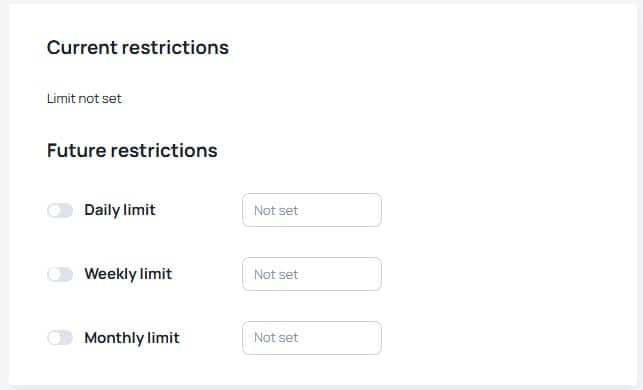
Deposit limits allow you to cap how much money you can add to your betting account over a set period, such as daily, weekly, or monthly. Loss limits, where available, restrict how much you can lose during a specific timeframe.
Deposit and loss limits are especially helpful because they reduce impulse decisions. Once your limit is reached, you cannot keep adding money just because you feel frustrated or hopeful.
Time Limits and Reality Checks
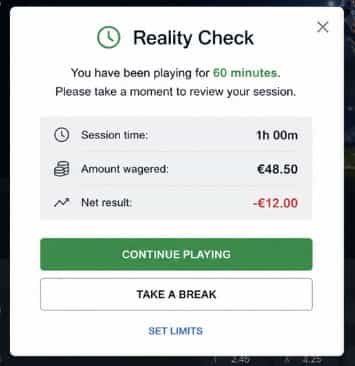
Time limits help control how long you spend gambling. Betting sessions can pass quickly, especially during live sports or fast-moving markets. A time limit gives you a clear endpoint.
Reality checks are reminders that appear while you are gambling. They may show how long you have been playing and, in some cases, how much you have won or lost. These reminders create a natural pause.
Cool-off Period
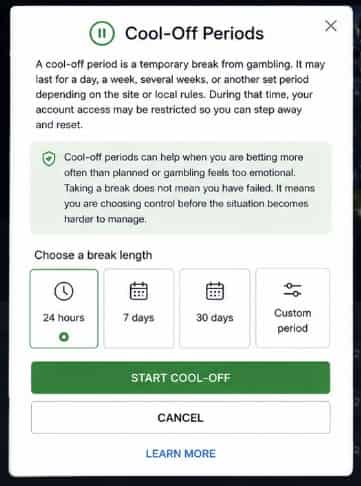
A cool-off period is a temporary break from gambling. It may last for a day, a week, several weeks, or another set period depending on the site or local rules.
Cool-off periods are useful when you notice that you are betting more often than planned or gambling feels too emotional. Taking a break means you are choosing control before the situation becomes harder to manage.
Self-Exclusion
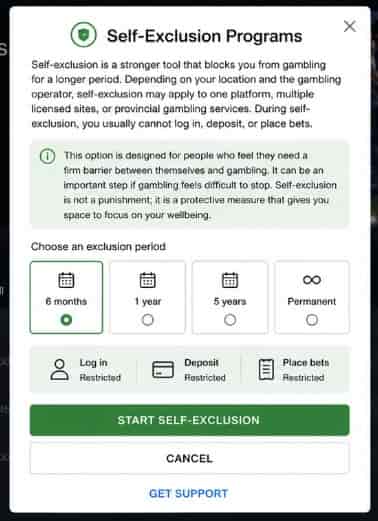
Self-exclusion is a stronger tool that blocks you from gambling for a longer period. Depending on your location and the gambling operator, self-exclusion may apply to one platform, multiple licensed sites, or provincial gambling services.
This option is designed for people who feel they need a firm barrier between themselves and gambling. Self-exclusion is not a punishment; it is a protective measure that gives you space to focus on your wellbeing.
Warning Signs of Gambling Harm
If gambling no longer feels like a choice, it is time to step back and consider using limits, taking a break, or reaching out for support.
Common warning signs include:
- Betting more money or more often than planned
- Trying to win back losses with bigger bets
- Gambling when stressed, lonely, angry, or intoxicated
- Hiding betting activity from family or friends
- Using money meant for bills, food, rent, or savings
- Feeling unable to stop even when gambling is no longer enjoyable
Where to Get Help
For Canadian bettors, the Responsible Gambling Council is a useful starting point for education, self-assessment tools, and help resources. Provincial support services are also available and may provide local counselling, helplines, and self-exclusion information.
Support options can vary by province, so it is worth checking your local responsible gambling service. The important thing is to use these resources early if betting starts to feel stressful or difficult to control.
International / Online support
Responsible Gambling on Our Site
On Canada-Betting.com, we take responsible play seriously. In every sportsbook review, we include a “Responsible Gambling” section detailing the RG tools available at that operator, such as deposit limits, loss limits, time-outs, cool-off options and self-exclusion.
We also place a link to this Responsible Gambling page in the site footer, so you can quickly find help and guidelines anytime.
Disclaimer
Gambling is entertainment, not income. No betting strategy guarantees profit. While our site may offer odds analysis and tips, betting should be done for fun. Always treat any bet as a risk of loss.
Stay safe: Gambling should never be a response to stress or financial pressure. If you ever feel that betting is causing harm or anxiety, please step back and seek help.
Remember: “Responsible Gambling = Safer Betting.” Use the knowledge, tools and limits described here to keep gambling a positive, controlled experience.
Bet for fun, not for income.
Stay in control. Set limits. Know the signs. Help is always available.